How We Help Little Ones Grow
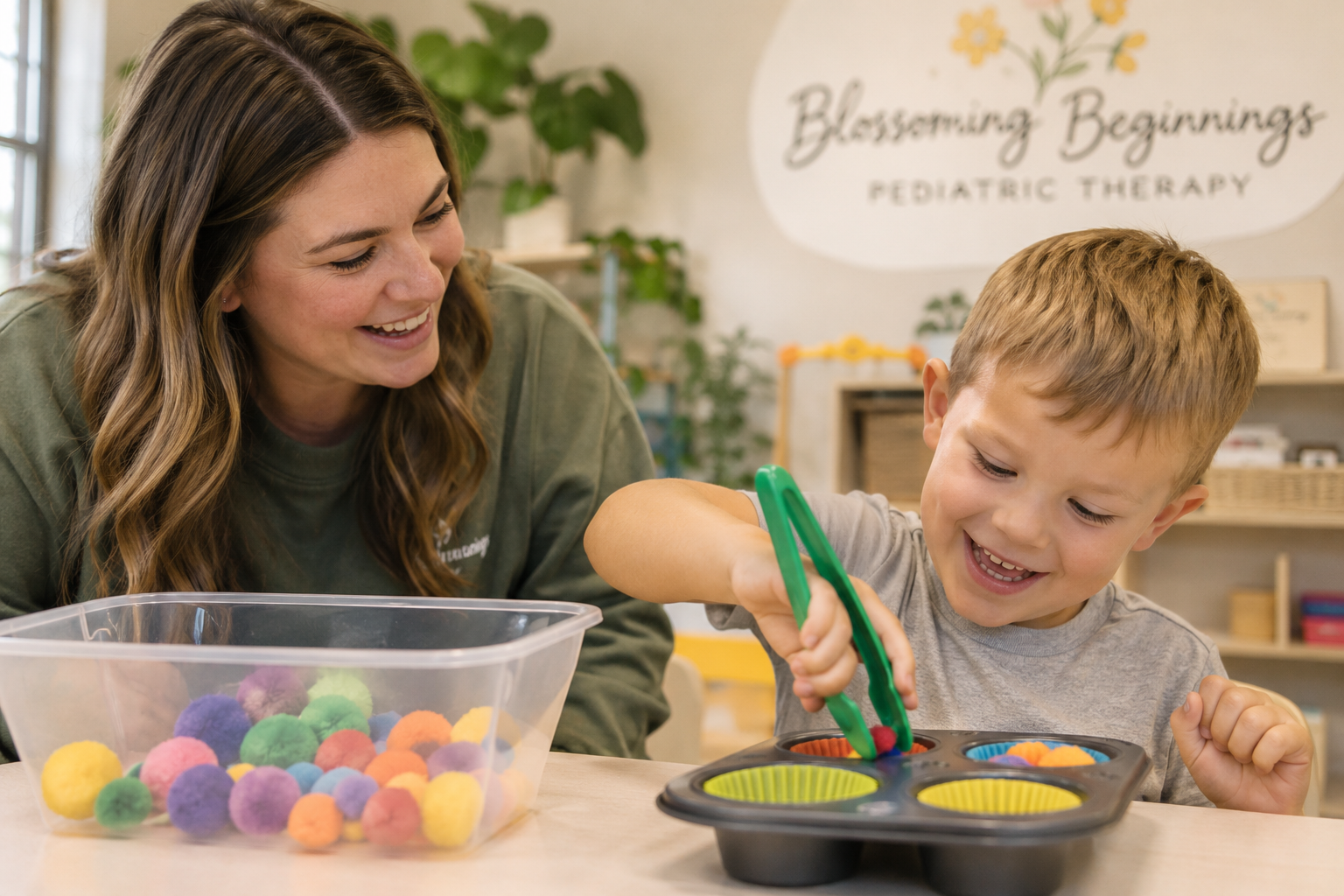
Helping little ones build the skills they need for everyday life.
Pediatric occupational therapy helps children develop the skills needed to participate in everyday activities at home, school, and in their communities. Through purposeful play and individualized activities, our occupational therapists support children as they build independence, confidence, and functional skills.
What can occupational therapy help with?
Fine motor skills, grasping, and hand coordination
Sensory processing and regulation
Handwriting and pre-writing skills
Dressing, feeding, and other self-care activities
Visual motor integration and coordination
Emotional regulation and attention
Play skills and social participation
Developmental milestones and independence
Occupational Therapy

Building strong foundations for movement and exploration.
Pediatric physical therapy helps children develop the strength, balance, coordination, and mobility needed to explore their world. Our physical therapists use fun, functional activities to encourage movement and support developmental progress.
What can physical therapy help with?
Gross motor development and milestones
Strength and muscle development
Balance and coordination
Crawling, standing, and walking
Mobility and movement patterns
Posture and body control
Gait and functional mobility
Developmental delays and physical limitations
Physical Therapy
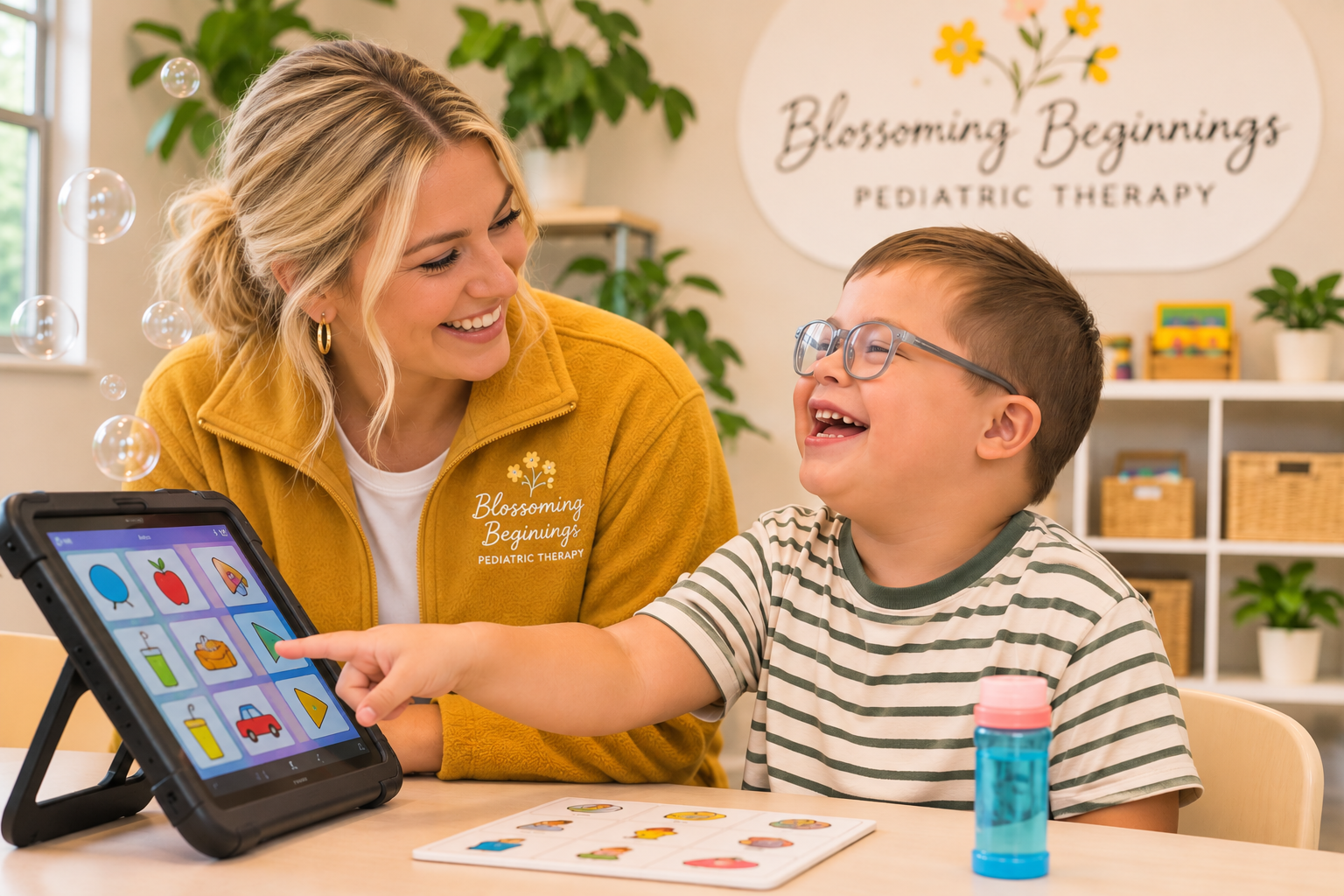
Speech Therapy
Helping little voices find their words and their confidence.
Speech-language therapy supports children in developing communication skills so they can express their wants and needs, connect with others, and participate more confidently in everyday life.
Our speech-language pathologists use individualized, play-based approaches to encourage communication and support each child's unique developmental needs.
What can speech therapy help with?
Expressive language and using words to communicate
Receptive language and understanding directions
Speech sound production and articulation
Early communication and language development
Social communication and interaction
Stuttering and fluency
Alternative and augmentative communication (AAC)
Feeding and swallowing concerns, when within the clinician's scope

Making mealtimes a little easier, one bite at a time.
Mealtimes can sometimes be challenging for children and families. Pediatric feeding therapy helps children develop the skills, comfort, and confidence needed to explore foods and participate in positive mealtime experiences.
Our therapists take a supportive, individualized approach to help children work through feeding challenges without pressure.
What can feeding therapy help with?
Food selectivity and picky eating
Difficulty trying new foods
Limited food variety
Oral motor skill development
Chewing and age-appropriate food textures
Sensory sensitivities related to food
Mealtime routines and participation
Developmental feeding challenges
Note: Feeding services are provided according to each treating therapist's training, credentials, and scope of practice.